
Children’s Music Through the Perspective of Fariborz Lachini

Fariborz Lachini views music as one of the fundamental tools for children’s growth and development—an art form that can become a child’s first language of communication and aesthetic experience, even before formal education begins.
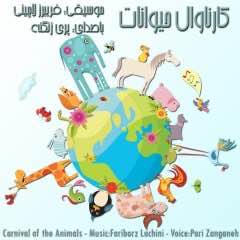
“The Carnival of the Animals” — Music by Fariborz Lachini
Music: The Child’s First Language
Fariborz Lachini views music as one of the fundamental tools for children’s growth and development. From his perspective, music is part of a child’s natural, everyday experience even before they become familiar with formal language and academic education; music can be a child’s first formal language.
He believes that children should be introduced, during the early years of life, to melodies that are simple and natural for them to follow and engage with. For this reason, in children’s music, melodic phrases should ideally be short, smooth, and limited in range. Avoiding a wide vocal range allows children to follow the melody more easily, sing along with it, and gradually develop an active relationship with music.
From Lachini’s perspective, the choice of instruments is also particularly important in children’s music. Not all instruments are capable of recreating the sonic and imaginative world of children. For this reason, in his works for children, he has made use of percussion instruments such as the spoon, cabasa, vibraphone, and triangle. The choice of instruments, alongside the musical characteristics, is also influenced by the poetry and the atmosphere of the lyrics, as music and poetry share a close and complementary relationship in children’s works.
In Lachini’s works for children, musical phrases are generally simple and easy to understand, avoiding unnecessary ornamentation and complexity. The aim is to create a direct connection between the child and music—one in which the child can listen to, understand, repeat, and enjoy the music.
Learning Music Through Color
One of Fariborz Lachini’s notable educational ideas is the integration of color and sound in teaching music to children. In his approach to children’s music education, he developed a method based on the connection between colors and musical sounds, in which colors such as red, blue, yellow, and green are each associated with a specific sound.
This approach is particularly engaging for children because colors are an integral part of their everyday world. Children encounter different colors every day in their clothes, toys, cars, carpets, and surrounding objects. By connecting this familiar world of colors with the world of sound and music, the method makes musical concepts more tangible, accessible, and exciting for children.
Lachini also emphasizes the importance of using large, clearly visible visual cues in music education. In his view, the musical staff and other educational elements should be presented at a scale that is engaging and easy for children to understand. This approach aligns with children’s natural curiosity and their fascination with large tools and objects—much like the excitement they may feel when putting on an adult’s oversized shoes and experiencing the world from a grown-up’s perspective.
A Child’s Musical Journey Begins Before Birth
Lachini believes that the human connection with music begins even before birth. The ear is one of the first organs to develop during the fetal stage, and before entering the world, a child is already exposed to the sounds around them—particularly the mother’s heartbeat—becoming familiar with rhythm and patterns of sound.
From his perspective, many of a child’s earliest comforting experiences are also connected to music and rhythm: the mother’s gentle, rhythmic patting on the child’s back, maternal lullabies, and even the rhythmic, repetitive movements children naturally make during their early years.
Children naturally respond to rhythmic sounds and simple, repetitive patterns. This simplicity and repetition can gradually become embedded in a child’s mind, laying the foundation for an understanding of musical patterns. Lachini believes that children may even have an early familiarity with rhythms experienced before birth through their mother’s heartbeat, and may respond to them during the first years of life.
Music & Child Development
From this perspective, music is not merely an artistic activity or form of entertainment for a child; it can serve as an important tool for growth, development, and the formation of the child’s mind during the early years of life.
Fariborz Lachini believes that before a child enters the formal stages of music education, music can serve as their first formal language—a language through which rhythm, repetition, melody, movement, and sound connect the child with the world around them.
However, in composing and producing music for children, it is essential to consider factors such as child psychology, local culture, the child’s living environment, and a proper understanding of age and developmental stage. Children’s music can have a deeper impact when it resonates with a child’s emotional and imaginative world and, rather than imposing adult complexities, speaks in a natural, accessible language that children can easily understand.